
A few days ago, we read the latest update of the study “An Approach to Olive Cultivation Costs”, prepared by AEMO, the Spanish Association of Olive-Growing Municipalities.
It is a technical document that analyses the profitability of different olive-growing models. It discusses productivity, mechanisation and costs. However, as we read it, we could not stop thinking about a reality we know well.
The study was not about a specific company. It was about traditional olive groves. But, backed by the authority of an independent organisation, it put figures to something many farmers have experienced for years: not all olive groves can produce in the same way or compete under the same rules.
When consumers see a bottle, there is an olive grove behind it
For most people, a bottle of extra virgin olive oil is simply a food product.
For those of us who grow olive trees, everything begins long before the olives reach the mill. It begins with the tree.
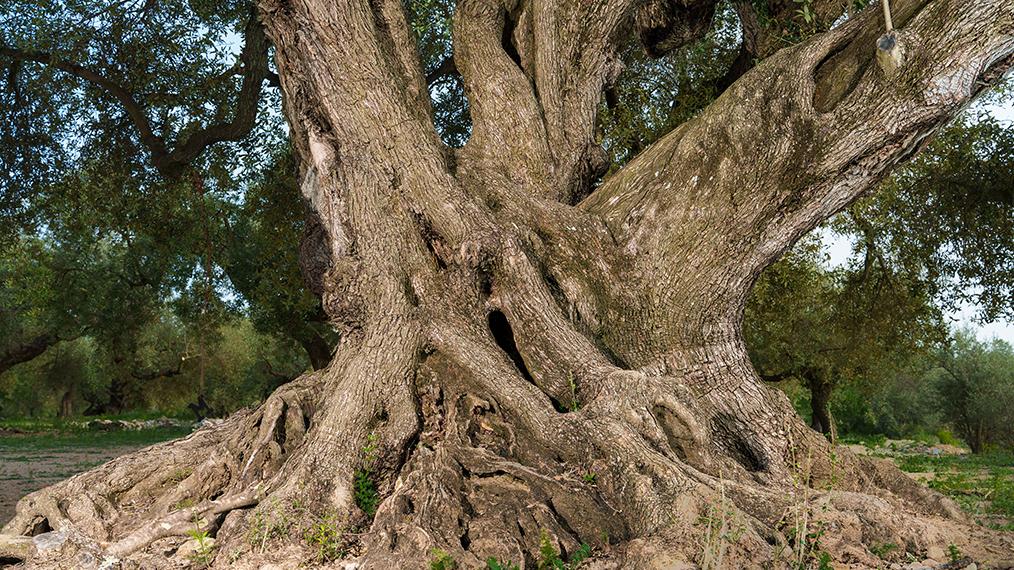
There are modern olive groves designed to facilitate mechanisation and optimise production. But there are also traditional olive groves: centuries-old and thousand-year-old trees whose cultivation requires much more manual work.
AEMO’s study confirms precisely this reality. When mechanisation is limited, costs increase significantly and competing solely on price is no longer an option.
The work that never appears on the label
Pruning, caring for the soil, monitoring each tree and harvesting with patience are all part of the work that consumers rarely see.
In a traditional olive grove, no two trees are the same. Each one requires different care, and every growing season brings new challenges.
This dedication is not always visible when a bottle reaches a shop shelf, but it forms part of its true value.
The same commitment, different ways of cultivating it
At Miliunverd, we work with two types of olive grove that represent two complementary realities.
Casolí comes from a younger olive grove in Tarragona. Arbor Senium and Arbor Sacris come from our centuries-old and thousand-year-old olive trees at Els Carlets in La Sénia.
They are different oils because they come from different trees, but they share the same philosophy: respecting their origin, working exclusively with olives from our own estates and helping to preserve the landscape that makes them possible.
The future of traditional olive groves
One of the most interesting reflections in AEMO’s study is that the future of traditional olive groves depends on society recognising the value of these landscapes, their heritage and the work behind every harvest.
We strongly identify with this idea. Preserving a centuries-old or thousand-year-old olive tree is not only about maintaining productive trees; it also means protecting a way of farming and a legacy for future generations.
The true value of a bottle
Perhaps that is why, when someone chooses an oil produced from a traditional olive grove, they are doing more than simply buying food.
They are supporting a way of cultivating the land that cannot easily be measured solely in terms of productivity.
AEMO’s study puts figures to this reality. Those of us who experience it every day know that there is another part that no report can quantify.
Because the price of a bottle ends when it is paid.
The value of an olive tree can last a thousand years.
AEMO 2026 Study on Olive Cultivation Costs
Eva Cabanes
CEO & Co-founder
Miliunverd · Estate-Grown Olive Oils